News & Events

News & Events

Apr, 2019 - Aug, 2019

Speaker: Prof Amir O. Caldeira
Affiliation: Universidade Estadual de Campinas, Instituto de Física Gleb Wataghin
Abstract Details:

We study the magnetic properties of electrons in small discrete rings with 3 ? N ? 6 sites and Ne = N electrons, some of which can be regarded as a simplified version of real aromatic molecules. In particular, the ring with six sites and six electrons is our prototype of the benzene molecule. Aiming at that goal we employ the Hubbard model with appropriate parameters t and U, and confirm it cannot account for the anisotropy of the diamagnetic susceptibility of some aromatic molecules. Benzene is a standard example of that. Therefore, we propose an extension of the Hubbard model with an extra interelectronic momentum-momentum coupling which is an effective two-body interaction between the itinerant electrons mediated by virtual transitions of the binding electrons of our pseudo molecules. Our results show that this extension of the Hubbard model is able to cause an enhancement of the anisotropic diamagnetic susceptibility in some specific cases.


About the Speaker:

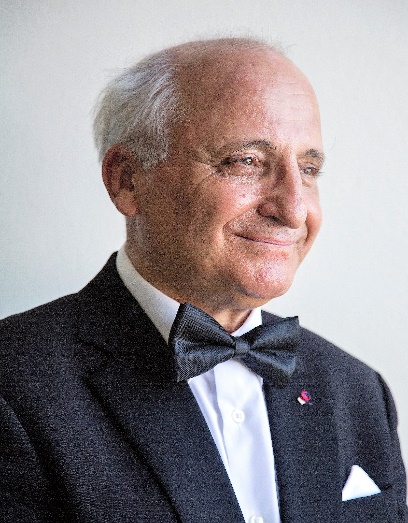
A. O. Caldeira
Graduated in physics from Pontifícia Universidade Católica do Rio de Janeiro (1973), MSc in physics from Pontifícia Universidade Católica do Rio de Janeiro (1976) and PhD in physics from University of Sussex (1980). Has experience in theoretical physics, focusing on condensed matter physics, and acting mainly on the following subjects: quantum dissipation, macroscopic quantum effects and low dimensional electronic systems.


Click HERE for directions


To view all the upcoming seminars, you can visit: https://graphene.nus.edu.sg/news-events/events/
You may also Like & Subscribe our following channels below to receive instant notifications for new announcements.

Speaker: Prof Stephan Roche
Affiliation: ICREA - Catalan Institute of Nanosciences and Nanotechnology - ICN2
Abstract Details:

In this talk, I will discuss some theoretical issues concerning the study of quantum transport in graphene and van der Waals heterostructures in presence of disorder and aperiodic potential due to Moiré or incommensurate potentials. A short mention to the physics of quasicrystals as driver to extend the computational capability of existing conventional scaling methods will be given, and illustrations of emerging features in defected structures in presence of magnetic fields, superlattice potentials and spin-orbit coupling –mediated pseudomagnetic fields will follow.

Reference: Introduction to Graphene-Based Nanomaterials
From Electronic Structure to Quantum Transport
AUTHORS: Luis E. F. Foa Torres, Stephan Roche and Jean-Christophe Charlier (Cambridge University Press 2014)
ISBN: 9781107030831


About the Speaker:

ICREA Prof. Stephan Roche is working at the Catalan Institute of Nanosciences and Nanotechnology-ICN2 and the Barcelona Institute of Science and Technology. He leads the "Theoretical and Computational Nanoscience" group which focuses on quantum physics in Dirac materials (graphene and topological insulators). He pioneered the development of linear scaling computational approaches for wavepacket dynamics, Kubo conductivities, and Landauer-Büttiker conductance in disordered materials. He studied Theoretical Physics at ENS and University UJF (France), received a PhD in Physics in 1996 (CNRS), and worked in Japan, Spain and Germany. He was appointed Assistant Prof. at UJF (2000) and CEA Researcher (2004). He received the Friedrich Wilhelm Bessel prize from the Alexander von Humboldt Foundation (Germany). He is the PI of ICN2 in the GRAPHENE FLAGSHIP, and is deputy leader of the Graphene Spintronics Workpackage.


Click HERE for directions


To view all the upcoming seminars, you can visit: https://graphene.nus.edu.sg/news-events/events/
You may also Like & Subscribe our following channels below to receive instant notifications for new announcements.

Speaker: Prof Young-Woo Son
Affiliation: Korea Institute for Advanced Study, Seoul, Korea
Abstract Details:

Interlayer interactions in stacked 2D crystals are one of key ingredients in exhibiting their qualitative different physical properties [1]. For example, a well-known 2D quantum spin Hall insulating transition metal dichalcogenide can show either topological Weyl metallic phase or trivial one depending on a minute stacking order difference [1,2]. Recent advances in fabricating stacked 2D crystals enable us to perform controlled studies on interesting electronic, magnetic and topological properties in low dimensional heterostructures. In this talk, I will first discuss interplay between interlayer interactions and electronic properties in graphene bilayer systems [3,4]. And I will also briefly discuss a possible modification in its phonon spectrum [5]. Regarding on electronic properties, I will show that the system has a quasicrystalline order through a perfect incommensurate interlayer interaction when two graphene rotate 30 degrees with respect to each other and shows localized 12-fold resonant states with fractal scaling [3,4]. In addition to existing 2D materials, if time allowed, I will also introduce a new computational scheme [6] to search a new family of 2D crystals [7] that will expand both material and property spaces of layered crystals.

References:
[1] Y.-W. Son, Nature 565, 32 (2019).
[2] H.-J. Kim, S.-H. Kang, I. Hamada and Y.-W. Son, PRB 95, 180101 (R) (2017)
[3] S. J. Ahn et al, Science 361, 782 (2018)
[4] P. Moon, M. Koshino, and Y.-W. Son, PRB 99, 165430 (2019)
[5] M. Koshino and Y.-W. Son, arXiv:1905.09660 (2019).
[6] K. Chae, D. Y. Kim, and Y.-W. Son, 2D Mater. 5, 025013 (2018)
[7] K. Chae and Y.-W. Son, Nano Lett. 19, 2694 (2019)


About the Speaker:

Prof Young-Woo Son received his Ph. D. Physics at Seoul National University in 2004 and had been a Postdoctor at UC Berkeley till 2006. He was Assistant Professor at Dept. Physics at Konkuk University Seoul Korea in 2007. He is currently a Professor at the Korea Institute for Advanced Study since 2008. He was a Visiting Professor at UC Berkeley in 2014 and a Visiting Professor at the Osaka University in 2017.


Click HERE for directions


To view all the upcoming seminars, you can visit: https://graphene.nus.edu.sg/news-events/events/
You may also Like & Subscribe our following channels below to receive instant notifications for new announcements.

Speaker: Prof Rachid Yazami
Affiliation: Nanyang Technological University / KVI PTE LTD
Abstract Details: 2D materials are widely used as anode and cathode materials in lithium ion batteries. Graphite and lithiated metal oxides (LMO) of lamellar structure are the choice material for anode and cathode application, respectively. Thermodynamics data, such as entropy and enthalpy can be measured owing to temperature dependence of open-circuit voltages (OCV) in lithium half-cells using the Equations: ?S=nF (?E^0)/?T and ?H=-nF(E^0-T (?E^0)/?T) , where n=number of electrons per mole of Li, n=1; F=Faraday constant and E^0=OCV. We found entropy and enthalpy profiles strongly depend on the crystal structure of graphitizing 2D carbonaceous materials heat treated at different temperatures and of the amounts of cation defects present in LMO materials, such as cation mixing. According, thermodynamics measurements can be used as materials characterization tools complementarily to other methods such as XRD and physical spectrometry (EELS, XAS, ….). In this presentation we will discuss on the origin of entropy and enthalpy in 2D materials according to the crystal structure disorder, which affect their electrode performances.
About the Speaker: Prof. Rachid Yazami, is a native of Fez, Morocco and a graduate of the Grenoble Institute of Technology (INPG) electrochemistry and materials science where he also received a Ph.D. on graphite intercalation compounds for lithium battery application, and began his career and rose to research director at CNRS (Centre National de la Recherche Scientifique) in Grenoble, France. Yazami is the inventor involved in more than 140 patents related to battery technology, including on state of charge, state of health and state of safety of batteries together with ultra-fast charge technologies. He also invented the graphite anode in 1979 currently used in most commercial lithium-ion batteries, an over $30B/year business. Dr. Yazami co-authored over 250 articles including peers reviewed papers, and book chapters on batteries and battery materials and systems. A founder in 2007 of CFX battery, Inc., (Contour Energy Systems) a primary and rechargeable lithium and fluoride battery start-up company in Azusa, California, Yazami has also been a visiting associate in Materials Science and in Chemistry at Caltech (Pasadena, California) in collaboration with JPL/NASA for 10 years. He served the President position of the International Battery Association (IBA) and as International Scientific Board member of several lithium battery conferences and events. In 2010, Dr. Yazami joined the Nanyang Technological University in Singapore (NTU) where he held the Nanyang Visiting Professor in Materials Science position. Until 2018, he served as the Director of the Energy Storage programs with the Energy Research Institute (ERI@N). Current research areas cover lithium batteries and “Beyond Lithium” future battery technologies, including liquid anode alkali metal-air and fluoride ion batteries. He is also was a PI of battery research at the TUM Create Center of e-mobility, jointly managed by NTU and the Technological University of Munich. In 2011, Yazami founded KVI PTE LTD a start-up company in Singapore dedicated to battery life and safety enhancement for mobile electronics, large energy storage and electric vehicles applications. KVI is a licensee of Caltech, CNRS and NTU patents invented by Yazami and his team on battery thermodynamics. The technology is currently endorsed by major mobile electronics, EV and battery manufacturers and R&D Centers. Applications include accurate assessments of state of charge, state of health and state of safety and ultrafast battery charging systems. In recognition of his pioneer work on the graphite anode in lithium ion batteries, Yazami received several scientific awards, including from NASA, NATO, IBA, Japan Society for the Promotion of Science Fellowship, the Hawaii Battery, the IEEE, the Draper Prize of the US National Academy of Engineering. He was a finalist of the Global Energy Award (Russia) and of the Marius Lavet Prize (France). In 2014 Yazami was decorated by HM the King of Morocco and is the recipient of the French Legion of Honor in 2016. Recently he received the “2018’ Takreem Award” in Science and Technology Innovation, considered the Arab Scientist of the Year Award.
Click HERE for directions


To view all the upcoming seminars, you can visit: https://graphene.nus.edu.sg/news-events/events/
You may also Like & Subscribe our following channels below to receive instant notifications for new announcements.

Speaker: Prof Nicola Marzari
Affiliation: Theory and Simulation of Materials (THEOS), and National Centre for Computational Design and Discovery of Novel Materials (MARVEL), École Polytechnique Fédérale de Lausanne (Switzerland)
Abstract Details:

We have performed an extensive high-throughput screening of known inorganic materials, in order to identify those that could be exfoliated into novel two-dimensional monolayers and multilayers [1]. The screening protocol first identifies bulk materials that appear layered according to a simple and robust chemical definition of bonding, determining then for all of these the binding energies of the respective monolayers, and their electronic state (metallic vs insulating), magnetic configuration (ferro-,ferri- or antiferro-magnetic), and phonon dispersions (to evaluate mechanically stability). Such protocol identifies a portfolio of close to 2,000 inorganic materials that appear either easily or potentially exfoliable, to be investigated further for promising properties. First focus has been on the determination of the effective masses and mobilities (from the full solution of the Boltzmann transport equation) for electronic applications; of topological invariants; of superconductivity and charge-density waves; and of photocatalytic parameters for water splitting. Thanks to the use of the AiiDA (http://aiida.net) materials' informatics platform, all the high-throughput calculations can be performed and streamlined in fully searchable and reproducible ways, they are stored in a database with the full provenance tree of all parent and children calculations, and can be shared with the community at large in the form of raw or curated data via the Materials Cloud (http://www.materialscloud.org) dissemination portal.

[1] Nicolas Mounet, Marco Gibertini, Philippe Schwaller, Davide Campi, Andrius Merkys, Antimo Marrazzo, Thibault Sohier, Ivano Eligio Castelli, Andrea Cepellotti, Giovanni Pizzi and Nicola Marzari, Two-dimensional materials from high-throughput computational exfoliation of experimentally known compounds, Nature Nanotechnology 13, 246–252 (2018).


About the Speaker:

Nicola Marzari holds the chair of Theory and Simulation of Materials at the École Polytechnique Fédérale de Lausanne, where he is also the director of the Swiss National Centre for Competence in Research NCCR MARVEL, on Computational Design and Discovery of Novel Materials (a 12-year effort, started in 2014, and currently involving more than 40 PIs). Previous tenured appointment include the Toyota Chair for Materials Engineering at the Massachusetts Institute of Technology, and the first Statutory (University) Chair of Materials Modelling at the University of Oxford, where he was also the director of the Materials Modelling Laboratory. He is the current chairman of the Psi-k Charity and Board of Trustees.


Click HERE for directions


To view all the upcoming seminars, you can visit: https://graphene.nus.edu.sg/news-events/events/
You may also Like & Subscribe our following channels below to receive instant notifications for new announcements.
Speaker: Mr Navneeth Ramakrishnan
Affiliation: NUS / Imperial College London
Abstract Details:

We generalize alternating optimization algorithms of Blahut-Arimoto type to classical-quantum and fully quantum problems. In particular, we give iterative algorithms to compute the classical capacity of classical-quantum channels and the thermodynamic capacity of quantum channels. The latter includes as special cases the minimal entropy gain of quantum channels and the completely bounded minimal conditional entropy. Our convergence analysis is based on quantum entropy inequalities and leads to an additive approximation error. The number of iterations required to achieve this accuracy is expressed in terms of the relative entropy contraction coefficient of the channel and the input dimension of the channel. We also discuss accelerated heuristics that converge much faster in practice.


About the Speaker:

Navneeth did his undergraduate and master's degrees at the National University of Singapore and is currently a PhD student in the group of Mario Berta at Imperial College London. His current research is on convex optimization techniques applied to quantum Shannon theory.


Click HERE for directions


To view all the upcoming seminars, you can visit: https://graphene.nus.edu.sg/news-events/events/
You may also Like & Subscribe our following channels below to receive instant notifications for new announcements.

Speaker: Prof Zhang Zhenyu
Affiliation: International Center for Quantum Design of Functional Materials, University of Science and Technology of China
Abstract Details:

The 2D materials family keeps its amazing pace in expanding its family size, with more and more growing and outreaching branches in its family tree. Each member in this family has its uniqueness in both fabrication methods and intriguing properties. Many of the layered materials also share clear commonalities, most notably weak van der Waals (vdW) coupling between the layers. In this talk, we will review some of the latest developments in exploration of the atomistic growth mechanisms of several newcomers to the 2D materials family, including blue phosphorene, grown on metal or semiconductor substrates following a novel half-layer-by-half-layer mode, tellurene, whose formation mechanism is rooted in the multi-valency nature of Te, and an unexpected layered material potentially harboring high-Tc superconductivity. Time permitting, we also present some of our latest findings towards materialization of 2D topological superconductivity that may serve as superior platforms for detecting and braiding Majorana zero modes.


About the Speaker:

Prof. Zhenyu Zhang received his B.S. degree from Wuhan University in 1982 and PhD degree from Rutgers University in 1989, both in physics. He was a Distinguished Research Scientist in the Materials Science & Technology Division of Oak Ridge National Laboratory and Professor of Physics (Chair of Excellence) at the University of Tennessee, USA before joining USTC in January 2011. Since 2011, he has been a Distinguished Chair Professor at USTC and serves as co-founding Director of the International Center for Quantum Design of Functional Materials (ICQD). His research interests lie in the fields of theoretical understanding of the formation, stability, properties, and potential applications of low-dimensional materials. His most recent research emphases have been on quantum design of functional materials for clean energy and quantum information. He has authored/coauthored ~270 peer-reviewed papers, and has disseminated the research findings in over 280 invited/keynote/plenary talks and lectures at professional meetings and research institutions. He is a fellow of the American Physical Society, and has served or currently serves on the editorial boards of several professional journals.


Click HERE for directions


To view all the upcoming seminars, you can visit: https://graphene.nus.edu.sg/news-events/events/
You may also Like & Subscribe our following channels below to receive instant notifications for new announcements.

Speaker: Prof Marc Tornow
Affiliation: Molecular Electronics, TU Munich, Germany
Abstract Details:

I will review our recent investigations on the charge transport through molecular self assembled monolayers (SAMs), which sensitively depends on the electronic structure of the molecules, the degree of order in the film and the nature of the organic-inorganic interface to the contacts. Our transport measurements made on organophosphonate monolayers covering a thin oxide on highly doped silicon samples reveal distinct contributions from non-resonant “through-bond”, trap-assisted and “through-space” tunneling. Stacking such monolayers into structurally ordered duplex layers leads to surprising dielectric properties, as measured by impedance spectroscopy. Furthermore, we have fabricated symmetric silicon contact pairs separated by 4 nm in distance, to investigate the charge transport through proteins. At low-temperatures, the measured conductance through cytochrome c is in agreement with tunneling through the formed silicon-protein-silicon junction.


About the Speaker:

After studying physics in Braunschweig and Heidelberg, Marc Tornow received his doctorate from the University of Stuttgart in 1997 with a dissertation at the Max Planck Institute for Solid State Research. Subsequently, he worked as a postdoctoral fellow at the Weizmann Institute of Science, Israel, and later on the development of RF devices at Infineon Technologies, Munich. From 2001 to 2006 Marc Tornow headed an independent junior research group sponsored by the German Federal Ministry of Education and Research (BMBF) at TUM’s Walter Schottky Institute. He acquired his postdoctoral teaching qualification (habilitation) for his work in the field of experimental physics in 2007 at TUM. Marc Tornow was a professor at TU Braunschweig from 2006 to 2013. In March 2013 he was appointed as professor of molecular electronics at TUM. Since April 2016 Marc Tornow additionally serves as cooperative department head at the Fraunhofer Research Institution for Microsystems and Solid State Technologies (EMFT).


Click HERE for directions


To view all the upcoming seminars, you can visit: https://graphene.nus.edu.sg/news-events/events/
You may also Like & Subscribe our following channels below to receive instant notifications for new announcements.

Speaker: Dr Torben Daeneke
Affiliation: School of Engineering, RMIT University, Melbourne, Australia
Abstract Details: Most metals feature an atomically-thin oxide layer at the metal air interface.[1] This also applies to liquid metals including molten tin, indium, gallium and their alloys. In many cases this oxide layer grows in a self-limiting reaction providing a pathway towards atomically-thin, two-dimensional materials.[2] This talk will discuss different liquid metal-based synthesis strategies for 2D materials and will highlight how large area ultrathin sheets can be isolated form the liquid metal interface. Interestingly, liquid metal-based synthesis strategies allow the isolation of atomically-thin nanosheets of non-stratified materials, providing an opportunity for drastically increasing the number of accessible 2D materials.[2] A variety of liquid metal derived materials will be discussed in this talk, including metal oxides,[2, 3] chalcogenides,[4] nitrides and phosphates.[4-7] The developed materials are ideally suited for a variety of applications including in electronics, piezotronics and catalysis.[5-7] References [1] T. Daeneke et al., Chemical Society Reviews, 2018, 47, 4073-4111 [2] A. Zavabeti et al., Science, 2017, 358, 332-335 [3] T. Daeneke et al., ACS Nano, 2017, 11, 10974-10983 [4] B. J. Carey et al., Nature Communications, 2017, 8, 14482 [5] N. Syed et al., J. Am. Chem. Soc., 2019, 141, 104–108 [6] N Syed et al., Nature Communications, 2018, 9, 3618 [7] D. Esrafilzadeh et al., Nature Communications, 2019, 10, 865
About the Speaker: Dr Torben Daeneke received his PhD in Chemistry from Monash University, Australia in 2012. After graduating he held postdoctoral appointments at the CSIRO and at RMIT University (Australia). In 2018 he joined RMIT’s School of Engineering as a faculty member and is now a Senior Lecturer. He has authored over 65 peer-reviewed journal articles and has been awarded several awards, fellowships and grants, with a total value exceeding $1.5M AUD, including a Discovery and a Discovery Early Career Researcher Award from the Australian Research Council. His research interests span from the chemistry of liquid metals over the synthesis and functionalisation of 2D materials to materials for energy and electronic applications. In recent years he has developed novel techniques for the synthesis of 2D materials using liquid metal solvents, leading to publications in Science, Nature Communications and JACS, among others.
Click HERE for directions


To view all the upcoming seminars, you can visit: https://graphene.nus.edu.sg/news-events/events/
You may also Like & Subscribe our following channels below to receive instant notifications for new announcements.

Speaker: Prof Oleg Sushkov
Affiliation: University of New South Wales
Abstract Details:

In the present work we explain the hour-glass magnetic dispersion in underdoped cuprates. The dispersion arises due to an interplay of the Lifshitz-type magnetic criticality and superconductivity. We provide a unified picture of the evolution of magnetic excitations in various cuprate families, including “hour-glass” and “wine glass” dispersions and emergent static incommensurate order. Besides explaining existing data on magnetic dispersion we propose a neutron scattering experiment that can directly test the developed theory.


About the Speaker:

https://www.physics.unsw.edu.au/staff/oleg-sushkov


Click HERE for directions


To view all the upcoming seminars, you can visit: https://graphene.nus.edu.sg/news-events/events/
You may also Like & Subscribe our following channels below to receive instant notifications for new announcements.